
Reviewed · MALLORCA TOURS
Els Calderers House Museum in Mallorca
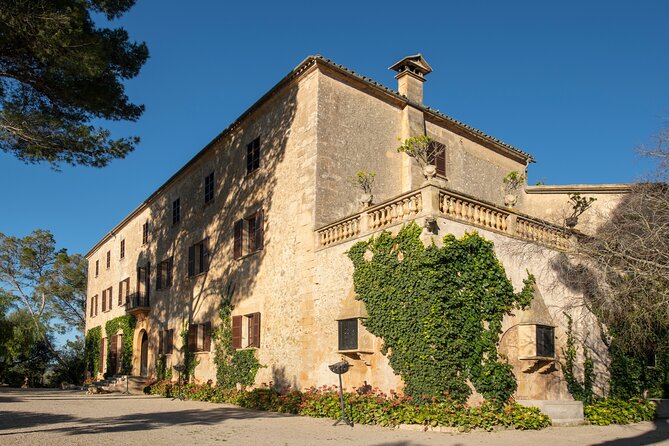
Els Calderers is not just a grand old house. Its more than 30 rooms trace the daily life of a Mallorcan estate, from the family’s chapel and formal bedroom to the peasant kitchen, blacksmith’s shop and barns. The result is a rare chance to see how one working property brought household life and rural labor together.
I like two things here: the rooms retain a strong sense of how the house was used, and the sequence of workshops and farm buildings adds context that a well-furnished manor alone could not provide. One important consideration is the animal area. Conditions have prompted sharply different reactions, so you may want to weigh that before visiting.
A few things to know before you go
- More than 30 rooms: The route takes in formal family spaces, work areas and service rooms.
- An English information sheet: An English sheet gives short descriptions of the main rooms, though its numbering may not always match the rooms.
- A working-estate theme: Expect a chapel, wine cellar, kitchen, bread oven, laundry, carpentry and blacksmithing areas, machinery, mills and animal corrals.
- About three hours: The visit is listed at roughly three hours, giving you time to move through both the house and its outbuildings.
- Free parking, no transport included: Parking is included, but you need to arrange your own ride to the estate.
- A sensitive animal-care question: The enclosures are part of the attraction, but reports on animal conditions vary. Keep this in mind if animal welfare is a deciding factor for you.
A Mallorcan estate told through its rooms
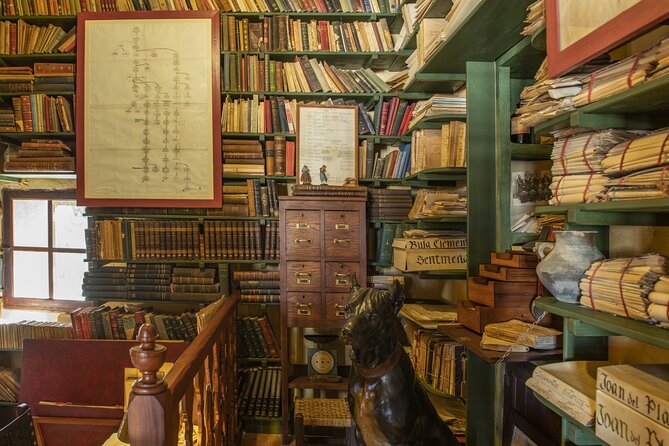
Els Calderers gives you something more specific than a walk through an old mansion. It presents a large country estate as a connected place: family life, religious observance, food preparation, skilled trades and animal care all had a place here. That range is the visit’s main strength. You can move from a formal interior to a workroom and then out to the corrals, seeing how the house related to the land around it.
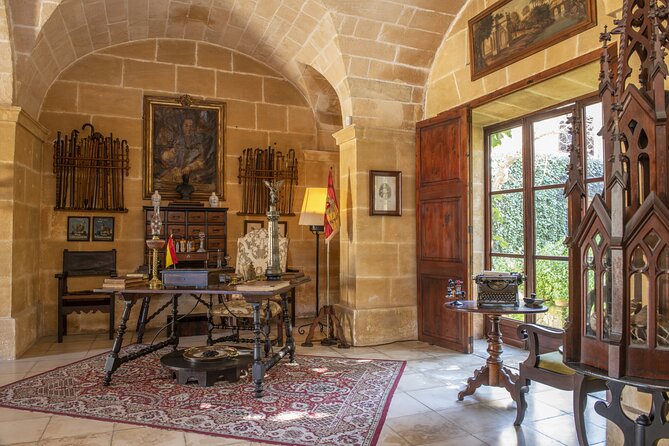
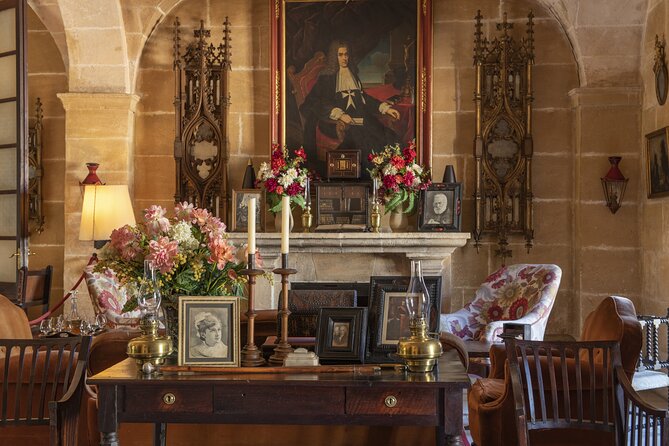
The estate dates to 1750 and belonged to a noble family. Its rooms contain furniture, clothing and household objects that help make the past feel lived in rather than staged as a sequence of empty period rooms. Several rooms have their own character, and the range of spaces gives the visit a personal scale despite the size of the property.
The house is often described as well preserved, and that is the quality I would look for first. A well-kept historical interior lets you focus on how rooms were used: who slept where, where food was made, where business was handled and where household staff worked. But preservation is not the same thing as perfect upkeep. Some areas may look dusty or tired, and the English information sheet can be confusing once its room numbers stop lining up with the spaces.
More museum visits in Mallorca:
- Manacor: Rafa Nadal Exhibition Entry Ticket
★ 4.6 · 836 reviews - Skip the Line: Rafa Nadal Museum Xperience
★ 4.0 · 196 reviews - Alcudia: Museum Sa Bassa Blanca Entry Ticket
★ 4.5 · 30 reviews
The first rooms: halls, chapel and cellar
The route begins on the ground floor, with five rooms listed at the start: two halls, the priest’s office, the chapel and the cellar, or celler. This opening gives you a useful introduction to the estate’s formal and religious life before the tour shifts toward bedrooms and household work.
The two halls help establish the house’s scale and status. The priest’s office and chapel are more distinctive than another run of sitting rooms would be. Their presence points to religion as part of the household’s everyday structure, rather than something kept separate from estate life.
The cellar adds a practical note. It belongs to the less polished side of the story: storing and processing food was part of running a large property. The house’s mix of ceremonial and functional spaces is what makes the sequence worth following. You are not only seeing how a wealthy family lived, but also how the estate supported that life.
If you use the English information sheet, take a moment to orient yourself at the start. It offers brief notes on the main rooms, but the numbering may become unreliable later in the route. Treat it as a prompt for looking closely, not as a precise room-by-room map.
The main bedroom and household quarters
From the first group of rooms, the route moves into the main bedroom and its related spaces. These include a common room, dressing rooms for the man and woman, a corridor, a toilet and an ironing room. Together, they show how the private rooms of a large household could include a surprising amount of support space.
The dressing rooms and ironing room are especially useful details. They shift your attention away from grand furniture and toward the work needed to maintain clothing and appearance. The layout also gives you a chance to consider how daily routines were organized around gender and status. The house is not only a display of wealth; it offers clues about who had access to which rooms and what tasks took place beyond the main bedroom.
The corridor and toilet may seem less dramatic than the chapel or sitting rooms, but they help complete the picture. When you visit an old house, it is easy to focus only on its most handsome spaces. Here, the smaller rooms make the household feel more complete and help explain how the main rooms functioned.
From the kitchen to the bread oven and laundry
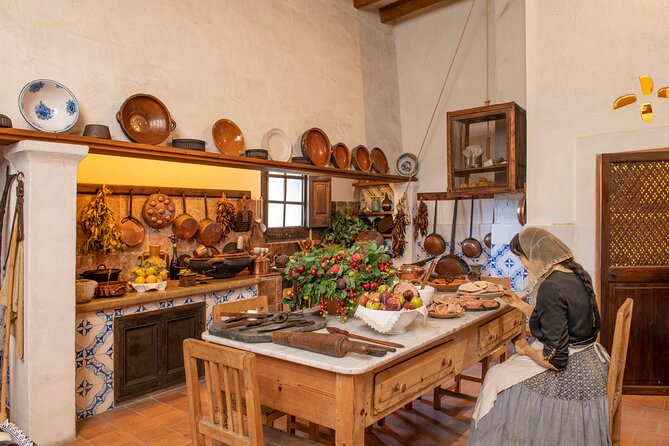
The route then turns toward the estate’s working side. You pass a barn, bedrooms, the mayoral’s office, a peasant kitchen, toilets, a bar, a souvenir area, a bread oven and a laundry. The change in mood matters: you are moving from the family’s rooms into the spaces that served the wider household and its labor.
The peasant kitchen is one of the most telling stops. It places food preparation within the broader structure of the property and gives you a counterpoint to the formal rooms. The bread oven and laundry continue that practical thread. They are reminders that a house of this size required steady work, not just fine furnishings.
The mayoral’s office adds another layer. It suggests that estate life involved management as well as domestic routines. The barn and bedrooms help connect those duties to the people and supplies that kept the property running.
There is also a bar and souvenir area on the route. These are practical visitor facilities, though they may feel less connected to the historical rooms. One useful tip: payment by card at the bar has not always been available, so bring another payment option if you expect to buy something there.
Same island, a different kind of day:
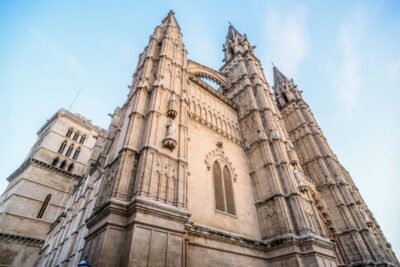
- Palma: Cathedral of Mallorca Skip-the-Line Entry Ticket
★ 4.6 · 14,386 reviews - Palma de Mallorca: 5-Hour Catamaran Cruise with Lunch & Swim
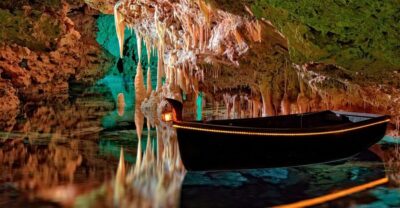
★ 4.5 · 9,957 reviews - Porto Cristo: Caves of Hams Entry Ticket
★ 4.2 · 6,548 reviews - Palma de Mallorca: City Sightseeing Hop-On Hop-Off Bus Tour
★ 4.1 · 4,450 reviews
Workshops, machinery and the working estate
The last part of the visit shifts to workshops and agricultural equipment. You see carpentry and blacksmithing spaces, machinery for processing carob and almonds, a pig-slaughter room, a flour mill, equine corrals and a porch where carts and harnesses are kept. This is where Els Calderers makes its case as more than a house museum.
The carpentry and blacksmithing areas show the kinds of skilled work that supported a rural estate. The carob and almond machinery brings local crops into the story, while the flour mill and carts point to processing and transport. These spaces help you understand how the property’s daily life depended on tools, animals and specialized tasks.
The pig-slaughter room is a more confronting part of the route. It reflects the practical realities of rural food production, but it may not suit every visitor, especially younger children or anyone uncomfortable with that subject. Its presence is also a reminder that the estate is presenting work and production, not only a picturesque version of country life.
The carts and harnesses make a fitting final stop. They bring the different parts of the estate together: crops and goods had to be moved, and animals were part of that system. For me, this working end of the route is one of the most valuable parts of the visit because it adds purpose to the rooms you have already seen.
The grounds, views and animal enclosures
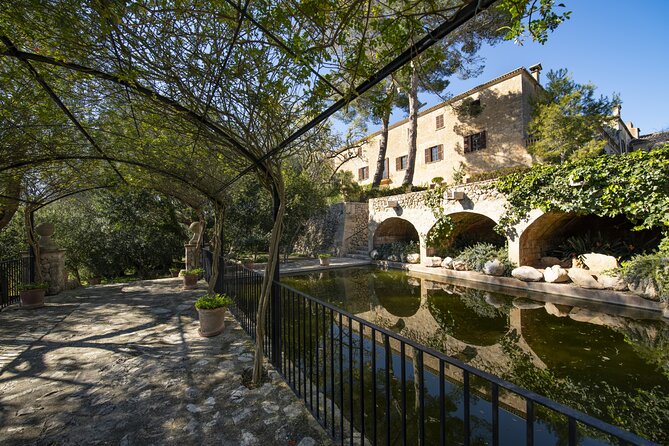
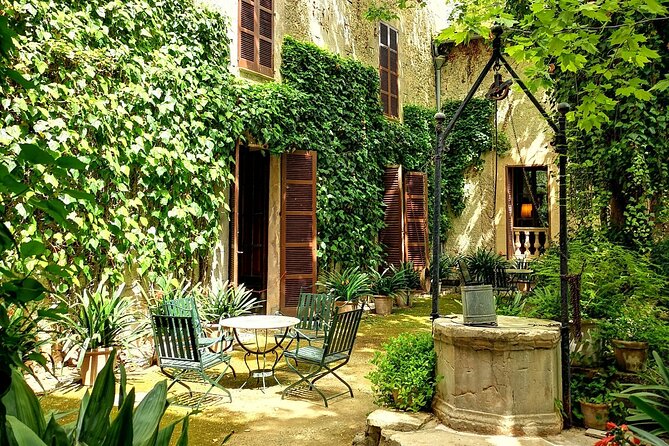
Outside the house, you can see gardens, orchards, barns, farm buildings and animal areas. The peaceful rural setting is a welcome contrast to the succession of interiors, and the grounds help you understand why the estate was organized around both domestic and agricultural work.
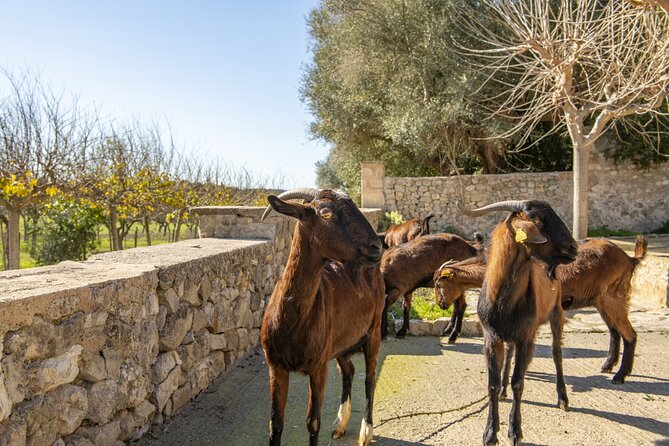
The animals are also the visit’s most significant caveat. Accounts of their condition differ. Some describe shade and water being available; others raise concerns about bare pens, hard flooring, limited bedding or animals standing in exposed spaces. These are serious, specific concerns, and they matter more than a minor flaw in a display.
If you are visiting mainly for the house, you can still find plenty to see indoors. If you are especially concerned about animal welfare, consider whether seeing the enclosures is something you are comfortable supporting. Conditions can change, and I would not treat an animal area as automatically suitable simply because it is part of a museum.
The exterior also includes an orange grove. Bitter oranges are not suitable for eating in the same way as sweet oranges, so a tree full of fallen fruit does not necessarily mean food is being wasted. It is a small detail, but a useful reminder that appearances alone do not tell the whole story of how an estate uses its crops.
Is three hours the right amount of time?
The visit is listed at about three hours, and the length makes sense for a house with more than 30 rooms plus outbuildings and grounds. If you like taking your time with historic objects, reading room notes and pausing outside, you will appreciate having a generous window. If you move quickly through museums, you may finish sooner.
The group limit is 15 people. That is small enough to avoid the feel of a large scheduled coach visit, though coach groups may arrive at the estate at other times. The property can still feel busy when groups overlap, but they may not remain for long.
English is offered, and an English information sheet covers the main rooms. There is no guide’s name or personal guiding service specified, so do not book expecting a named guide to lead a detailed talk. The written notes are brief. They can help you get your bearings, but you will need to supply some of your own curiosity.
What the admission price gets you
At $10.81 per person, the ticket is fairly priced if you want to spend time with the house and its working spaces. Admission is included, and free parking removes one extra cost. The value comes from the breadth of the visit: you are not paying just to see a formal interior, but also the service rooms, workshops, machinery and grounds.
The price will feel less compelling if you expect a polished, fully interpreted museum experience. The English notes are short, and their numbering can become confusing. Some parts of the estate may also appear less maintained than others. You are paying for access to a substantial historical property, not a guaranteed guided tour or a consistently refined exhibition.
Allow for your own transport. Private transportation is not included, so the free parking is most useful if you are arriving by car. Tickets can be bought online or at the bar, but card payments at the bar have not always been possible. Booking about 10 days ahead is typical, though that is an average rather than a rule.
Who will get the most from Els Calderers?
I would recommend Els Calderers to you if you enjoy historic houses, everyday domestic objects and the practical story behind country estates. The variety is the draw: you can see a chapel, family bedrooms, a peasant kitchen, a laundry, workshops and farm machinery in one visit. It also suits anyone who wants a quieter inland stop focused on Mallorcan history rather than a day built around beaches.
Families may find the changing rooms and outdoor spaces more engaging than a house with only formal interiors. Still, the pig-slaughter room and the animal enclosures are worth considering in advance. If you are visiting with children, decide whether those parts fit your family’s interests and comfort level.
I would be more cautious if your priority is a polished museum with detailed English interpretation, or if animal care is a central concern for you. The visit has real historical appeal, but the information is limited and the animal area is a point of uncertainty. You can still make a worthwhile visit, but it helps to know what matters most to you before setting out.
Should you book Els Calderers?
Book if you want to see how a Mallorcan estate worked, not just how its owners lived. The rooms, household objects and outbuildings give the visit its value, and the roughly three-hour duration lets you take in the property at a relaxed pace.
Think twice if you need detailed guided commentary or are uncomfortable with the mixed accounts of animal conditions. For a modest admission price, Els Calderers offers a broad and memorable look at estate life, but it is best approached with realistic expectations about interpretation and upkeep.
FAQ
How long does the visit take?
The visit takes about three hours. The route includes more than 30 rooms, workshops, farm buildings and outdoor areas.
What is the admission price?
The listed price is $10.81 per person, with admission included.
Is the experience offered in English?
Yes. The experience is offered in English, and an English information sheet gives brief descriptions of the main rooms.
How many rooms are included?
More than 30 rooms are visited, including halls, a chapel, bedrooms, a kitchen, a laundry and work areas.
Is parking included?
Yes. Free parking is included.
Is private transportation included?
No. Private transportation is not included, so you need to arrange your own transport to the meeting point.
What is the maximum group size?
The activity has a maximum of 15 people.
Where does the visit start and end?
It starts at Museu Etnològic dels Calderers, Finca Els Calderers, Camino Els Calderers, 07240 San Juan, Illes Balears, Spain. It ends back at the meeting point.
Can I cancel for a refund?
You can cancel at least 24 hours before the experience starts for a full refund. Cancellations or changes made less than 24 hours before the start are not accepted for a refund.
Newest tours in Mallorca
- Visit to the Coloms water cave★ 4.9 · 10 reviews
- Palma: Private Guided Segway Tour★ 4.9 · 15 reviews
- VISIT BODEGAS BORDOY ,DEGUSTACION 5 WINES, FINGER FOOD★ 5.0 · 3 reviews
- Mallorca Shore Excursion Bellver Castle and Cathedral Private Tour★ 5.0 · 4 reviews
- Travel and play tennis in Mallorca★ 5.0 · 5 reviews
- V8 Trike Tour mit Fahrer/Guide für max 4Gäste★ 5.0 · 40 reviews
- Tour Beach Portal Vells, Cave Portal Vells.★ 5.0 · 7 reviews
- Tramuntana Panorama Tour – Soller, Deiá, Valldemossa★ 4.9 · 34 reviews
Mallorca Tours, compared.
Cathedral of Mallorca Skip-the-Line Entry Ticket
Read our review →

Island Tour with Boat, Tram & Train from the South
Read our review →
Catamaran Cruise with Swimming and Snorkelling
Read our review →
Caves of Drach Day Trip & Optional Caves of Hams
Read our review →
Quad Bike Tour, Snorkeling, and Cliff Jumping
Read our review →Browse the lists this tour appears in