Reviewed · MALLORCA TOURS
Secrets of Jewish Majorca – Half Day Experience
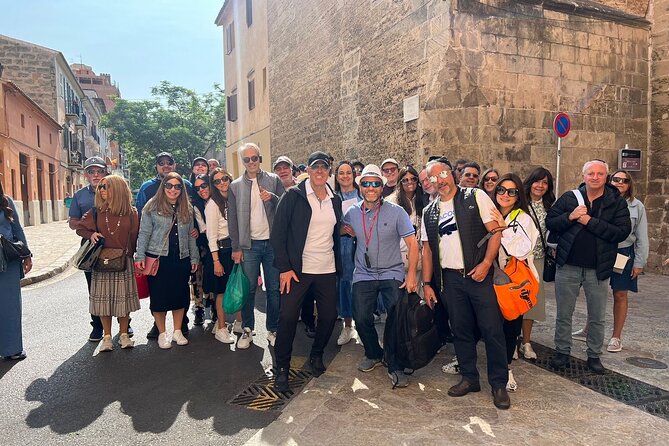
Palma’s Jewish past is written into its narrow streets, family histories, and even the ingredients of a famous pastry. This private walk links the old Jewish Quarter with the story of the Xueta, families who faced centuries of prejudice while preserving parts of their identity.
I like two things in particular: the route goes beyond the main quarter to places tied to Xueta life, and it connects history to everyday Palma, from family-run jewelry shops to ensaimada made with pork fat. The main consideration is the $259.29 per-person price. For a four-hour walk, it makes most sense if you want a focused, private history tour rather than a general introduction to Palma.
Key points before you book
- The tour is private: Only your group takes part, so the pace and discussion are not shared with strangers.
- The route is about four hours: Most of the time is spent on foot in Palma, with stops at a heritage museum and a historic bakery.
- The Call is the starting point: Learn why streets in Catalan-speaking parts of Spain may carry the name Carrer del Call, meaning street of the Jewish quarter.
- Xueta history is central: The walk explores forced conversions, Crypto-Jews, and the streets where Xueta families lived into the 1960s.
- A bakery visit gives the story a local flavor: Panaderia Fiol has a medieval oven dating to 1652.
- The route finishes where it starts: Meet at the Starbucks at Plaça de Cort, 1, and return there at the end.
Palma’s Jewish past, read street by street
The heart of this experience is not a single monument. It is the way the guide connects streets, buildings, family names, and customs into a story that can be difficult to see on your own. You begin at the Jewish Quarter Interpretation Center, next to the entrance to Palma’s old Jewish Quarter, then walk into an area where the past is not neatly fenced off from present-day life.
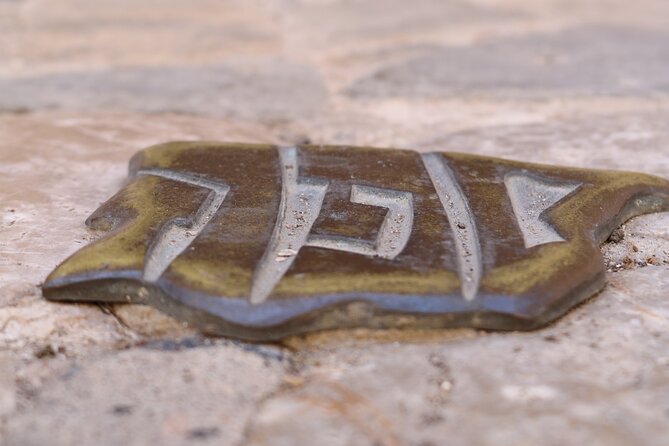
In Palma and other Catalan-speaking parts of Spain, you may come across signs reading Carrer del Call. The word Call refers to a Jewish quarter. Here, that street name gives you a useful starting point, but the tour’s larger subject is what happened to Jewish communities after religious pressure and forced conversions reshaped life on the island.
The walk explains how people who publicly professed Catholicism could privately continue Jewish practices. These people are often called Crypto-Jews. Their history is not just a tale of concealment; it also raises questions about identity, survival, and how families carry traditions through generations.
I value this kind of guided context because the evidence can be quiet. A street name or an old family business may not tell you much until someone explains what to look for and why it matters. A guide’s ability to handle that history with care is especially important here. The route promises a great deal of interpretation, so the experience will depend on how clearly your guide connects the facts to the places you are seeing.
Other tours people book in Mallorca:
- Palma: Cathedral of Mallorca Skip-the-Line Entry Ticket
★ 4.6 · 14,386 reviews - Palma de Mallorca: 5-Hour Catamaran Cruise with Lunch & Swim
★ 4.5 · 9,957 reviews - Porto Cristo: Caves of Hams Entry Ticket
★ 4.2 · 6,548 reviews
A tunnel, memorial stones, and layers of Palma
One of the route’s more unusual details is a secret tunnel in a ceramics workshop. The supplied tour information does not explain the tunnel’s age or original purpose, so treat it as a distinctive stop rather than a major historical claim in itself. Its appeal is that it takes you inside a working craft setting as you move through the old quarter.
The itinerary also includes memorial stones or plaques described as Stolpersteine, connected with the Spanish Civil War. They add another layer to a walk already focused on exclusion and persecution. The history of the Jewish community and the memorials are not the same story, but both invite you to think about the people who can disappear from public memory when a city’s past is told too simply.
You will spend about three hours in the Palma portion of the experience, according to the stated timing. That leaves room for several stops and discussion, but it is still a walking tour through streets and heritage sites, not a long museum visit. If you prefer a brisk overview with a guide who keeps moving, this format may suit you. If you want to linger over every plaque or ask extended questions at each stop, ask the operator how flexible the pace is before booking.
The Xueta story beyond the old quarter
The tour’s most specific focus is the Xueta, a community in Mallorca whose families were marked out and marginalized because of their Jewish ancestry. The walk visits streets where Xueta families lived for centuries, as recently as the 1960s. That detail makes the history feel close in time: this is not only about medieval Palma, but about social divisions that continued into the lives of people living in the modern era.
The guide also points out traces of that history in current family businesses. Some jewelry shops have remained in the same families for generations. Those shops are not simply picturesque storefronts; they can help explain how family networks and livelihoods endured through discrimination. You will get more from this part if you listen for connections between place, occupation, and inherited identity rather than expecting one dramatic landmark to explain everything.
The tour’s treatment of forced conversion and private religious practice should be a draw for anyone interested in Jewish history, Spanish history, or the ways communities preserve culture under pressure. It is also a specialized subject. If you are traveling with children or anyone unfamiliar with the Inquisition, you may want to set expectations beforehand: the walk deals with religious coercion and long-standing prejudice, not just architecture and local legends.
Maimó Ben Faraig and the value of a museum stop
The Centre Maimó Ben Faraig is listed as a 30-minute museum visit. A short museum stop can be useful after the street walk, giving you a place to gather details and connect names and events. It also provides a change of pace from walking through the quarter.
The visit is included in the route, and no separate admission charge is listed. The available information does not specify which displays are on view or whether the museum has a particular focus within the broader story. Go in ready to ask your guide what to look for, especially if you want to understand how the museum’s material relates to the Xueta families and the Crypto-Jewish history discussed outside.
This is one reason a private format may be worth paying for. You can ask questions that match your interests instead of following a fixed group discussion. But private does not automatically mean the guide will tailor every stop in detail, so it is sensible to say at the beginning whether you are especially interested in religious history, family heritage, architecture, or Palma’s modern social history.
Same island, a different kind of day:
- Palma de Mallorca: City Sightseeing Hop-On Hop-Off Bus Tour
★ 4.1 · 4,450 reviews - Mallorca: Island Tour with Boat, Tram & Train from the South
★ 4.4 · 3,888 reviews - Palma: Catamaran Cruise with Swimming and Snorkelling
★ 4.3 · 2,859 reviews - Mallorca: Caves of Drach Day Trip & Optional Caves of Hams
★ 4.3 · 2,720 reviews
Ensaimada, pork fat, and a 1652 oven
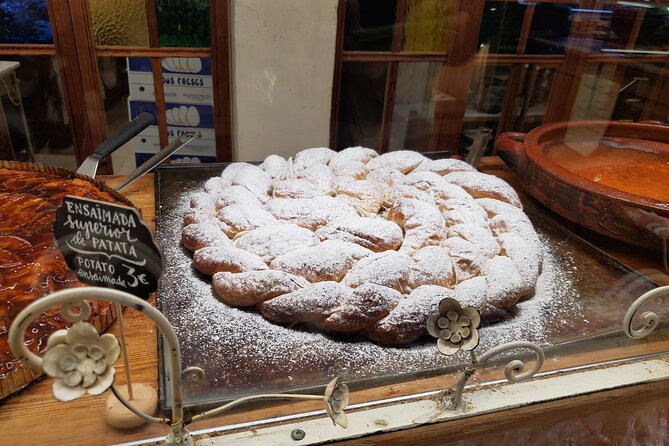
At Panaderia Fiol, the tour turns to food and a piece of working history: a medieval oven dating to 1652. The bakery visit lasts about 30 minutes. It is a compact stop, but it gives the walk a memorable way to discuss how cultural identity can show up in ordinary things people eat.
The tour connects the ensaimada, Mallorca’s famous pastry, with the use of pork fat. The explanation offered is that this ingredient reflects centuries of prejudice and discrimination against Jewish people. That is a striking detail, and it helps make the tour’s larger themes easier to remember. It is also worth hearing the guide’s explanation in context rather than treating one pastry as a complete account of the island’s food history.
Food is not included in the price, and the tour does not include coffee, tea, breakfast, lunch, or snacks. Do not count on this stop as a meal. If you want to eat before or after the walk, plan that separately. The bakery is presented as a heritage stop, not as a promised tasting.
What the $259.29 price buys
At $259.29 per person, this is a costly half-day activity, especially for a solo traveler or a small party. Its value rests on the private format, the specialist subject, and the access to several connected places in central Palma. The cost includes all fees and taxes, but food and drinks are extra.
A private tour can be good value if your group is keen on the subject and will make use of the guide’s time. You can ask questions, spend attention on the parts that matter most to you, and avoid waiting for a larger group. Group discounts are available, which may improve the per-person price if you are traveling with others. The tour is commonly booked well ahead, on average 57 days in advance, so this is not necessarily a last-minute choice.
There is a real trade-off. If you want a broad first look at Palma, this tour may be too focused on one strand of its history for the price. If you are specifically interested in Jewish life in Mallorca, the Inquisition, or the Xueta community, the route offers a more concentrated experience than a general city walk.
Guide quality is particularly important here. The tour’s strongest potential is a guide who can make the history clear and keep the route organized; a less effective guide could leave the same stops feeling disconnected. The overall score is 4.6 out of 5 from 11 ratings, with 91 percent recommending it. That is encouraging, though the small number of ratings means it should not be treated as a guarantee.
One practical point: do not plan your visit around a Judaica shop. A shop once associated with the experience is reported to have closed, and the stated route now ends back at the meeting point rather than at a store. If shopping is important to you, check directly with Jewish Majorca before you book.
Meeting point, timing, and a few useful cautions
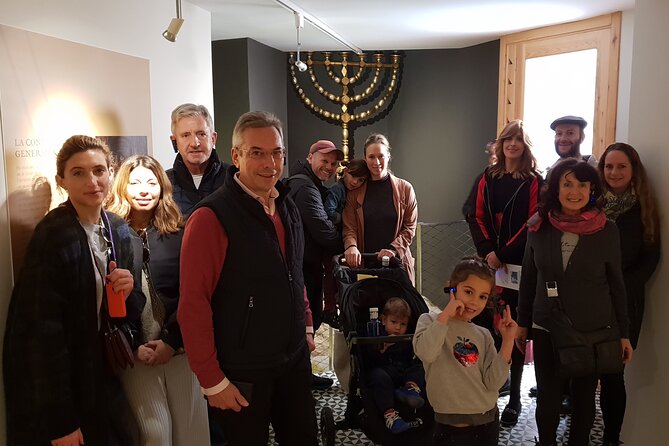
The meeting point is Starbucks at Plaça de Cort, 1, in central Palma. The tour ends back there. The activity lasts approximately four hours, combining about three hours in the main Palma portion with a 30-minute museum stop and a 30-minute bakery visit. The timings are approximate, so allow a little breathing room if you have plans immediately afterward.
The experience is private, and most people can participate. Confirmation is provided within 48 hours of booking, subject to availability. The tour requires good weather; if poor weather causes cancellation, you will be offered another date or a full refund. You can cancel for a full refund up to 24 hours before the start time. Changes or cancellations inside that 24-hour window are not accepted for a refund.
Because this is a history walk with several stops, comfortable walking shoes are a sensible choice. That is practical advice rather than a special dress requirement: no clothing rules or accessibility details are provided. The tour does not include refreshments, so bring what you need and arrange a proper meal before or after.
Should you book Secrets of Jewish Majorca?
Book this tour if you want a private, focused account of Palma’s Jewish past, especially the history of Crypto-Jews and the Xueta community. The combination of the old quarter, family streets, museum, tunnel, memorial stones, and bakery gives the subject several points of contact with everyday Palma.
Think twice if you are mainly after a general sightseeing walk, a food tour, or a guaranteed shop visit. At this price, the guide’s historical skill matters a great deal. If you book, ask in advance whether the current route includes the ceramics workshop tunnel and the Maimó Ben Faraig museum, and confirm that no Judaica shop stop is planned. For the right history-minded visitor, this can be a thoughtful half-day; for a casual city overview, your money may go further elsewhere.
FAQ
How long does the tour last?
It lasts approximately four hours.
Is the tour private?
Yes. Only your group participates.
Where does the tour start?
It starts at Starbucks, Plaça de Cort, 1, in central Palma.
Where does the tour end?
It ends back at the meeting point.
What locations are included?
The route includes the Jewish Quarter Interpretation Center, streets connected with Xueta families, a ceramics workshop tunnel, memorial stones or plaques, the Centre Maimó Ben Faraig, and Panaderia Fiol.
Is food or drink included?
No. Coffee, tea, breakfast, lunch, and snacks are not included. All fees and taxes are included.
How much does the tour cost?
The stated price is $259.29 per person. Group discounts are available.
What happens if bad weather cancels the tour?
You will be offered a different date or a full refund.
Newest tours in Mallorca
- Visit to the Coloms water cave★ 4.9 · 10 reviews
- Palma: Private Guided Segway Tour★ 4.9 · 15 reviews
- VISIT BODEGAS BORDOY ,DEGUSTACION 5 WINES, FINGER FOOD★ 5.0 · 3 reviews
- Mallorca Shore Excursion Bellver Castle and Cathedral Private Tour★ 5.0 · 4 reviews
- Travel and play tennis in Mallorca★ 5.0 · 5 reviews
- V8 Trike Tour mit Fahrer/Guide für max 4Gäste★ 5.0 · 40 reviews
- Tour Beach Portal Vells, Cave Portal Vells.★ 5.0 · 7 reviews
- Tramuntana Panorama Tour – Soller, Deiá, Valldemossa★ 4.9 · 34 reviews
Mallorca Tours, compared.
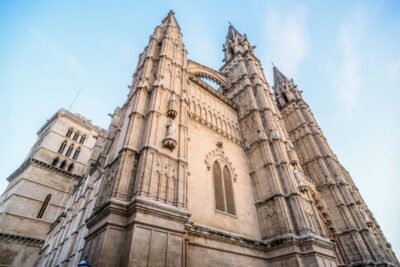
Cathedral of Mallorca Skip-the-Line Entry Ticket
Read our review →
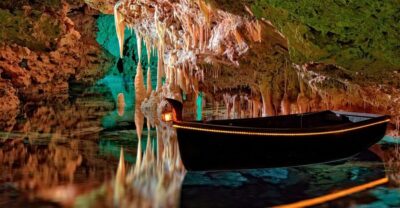
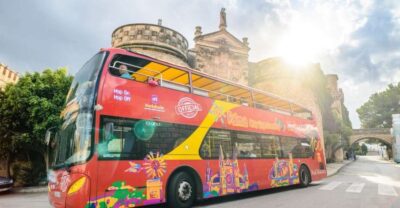
Island Tour with Boat, Tram & Train from the South
Read our review →
Catamaran Cruise with Swimming and Snorkelling
Read our review →
Caves of Drach Day Trip & Optional Caves of Hams
Read our review →